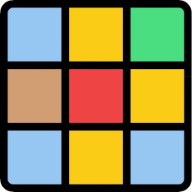
Clusters: The Daily 16-Word Grouping Puzzle (And How to Win It)
Word grouping puzzles have taken the internet by storm. Here is how Clusters brings advanced vocabulary, subtle wordplay, and four difficulty tiers into an addictive daily ritual.
Ever since Wordle sparked a renaissance in daily brain teasers, word enthusiasts have looked for games that reward deeper lateral thinking. Grouping puzzles—where a board of 16 seemingly disparate words must be organized into four distinct thematic groups of four—represent the golden standard of modern word gaming.
Understanding the Four Color Tiers
Clusters categorizes every puzzle into four distinct tiers marked by color:
- 01🟨 Yellow (Straightforward): Direct definitions and obvious synonyms (e.g. Words meaning Arrogant or Concise).
- 02🟩 Green (Moderate): Contextual themes or functional descriptions (e.g. Words describing Speech or Deception).
- 03🟦 Blue (Challenging): Etymological links, prefixes, and classical roots (e.g. Latin Root 'Mal' or Words denoting Praise).
- 04🟪 Purple (Tricky / Lateral): Subtle linguistic wordplay, spelling quirks, or unconventional associations (e.g. Silent letters or Words starting with 'Ob-').
3 Pro Tips to Solve Clusters Every Day
1. Spot the 'Overlapping 5'
If you see 5 words that seem to fit the same theme, don't guess immediately! One of those words is a deliberate decoy belonging to a harder group. Look for other candidate categories first before committing your guess.
2. Work Backwards From Unique Outliers
Find the single most obscure word on the board. Because it has fewer possible interpretations, identifying its probable theme makes it much easier to isolate its three partners.
3. Heed the 'One Away' Signal
When Quizingo shows you a "One away!" alert, you know 3 of your 4 words are correct. Don't swap all 4; systematically rotate just one suspect word to lock in the category.